
A training organization specializing in the intersection of trauma, somatic psychotherapy, and transference.
The ProtocolThe Trauma Integration Protocol™ is a somatic, memory-based healing approach focusing on organic body processes to resolve the energetic impact of stressful and overwhelming life events and experiences.
Using this framework, we support practitioners and therapy clients in their efforts to provide and gain healing from traumatic events.


Stress and trauma are fundamentally non-cognitive phenomena, both housed in the more primitive, unconscious, non-cognitive, non-verbal, autonomic nervous system (ANS).
We all share the same basic autonomic setup. Our Autonomic Nervous System controls thousands of automatic physiological functions that operate below consciousness and deeply influence our sense of self, others, and the world. This system houses our reactivity, in other words, our adaptive survival responses to any threats or events we experience as stressful or traumatic.
The Trauma Integration Protocol™ was developed to precisely recalibrate this ANS response in order to reduce the reactivity and shift the narratives we build around trauma, eliminating the symptoms and triggers in the process.
In contrast to talk therapy, the Trauma Integration Protocol™ is a somatic modality, applying a bottom-up approach that begins by attending to the autonomic nervous system.
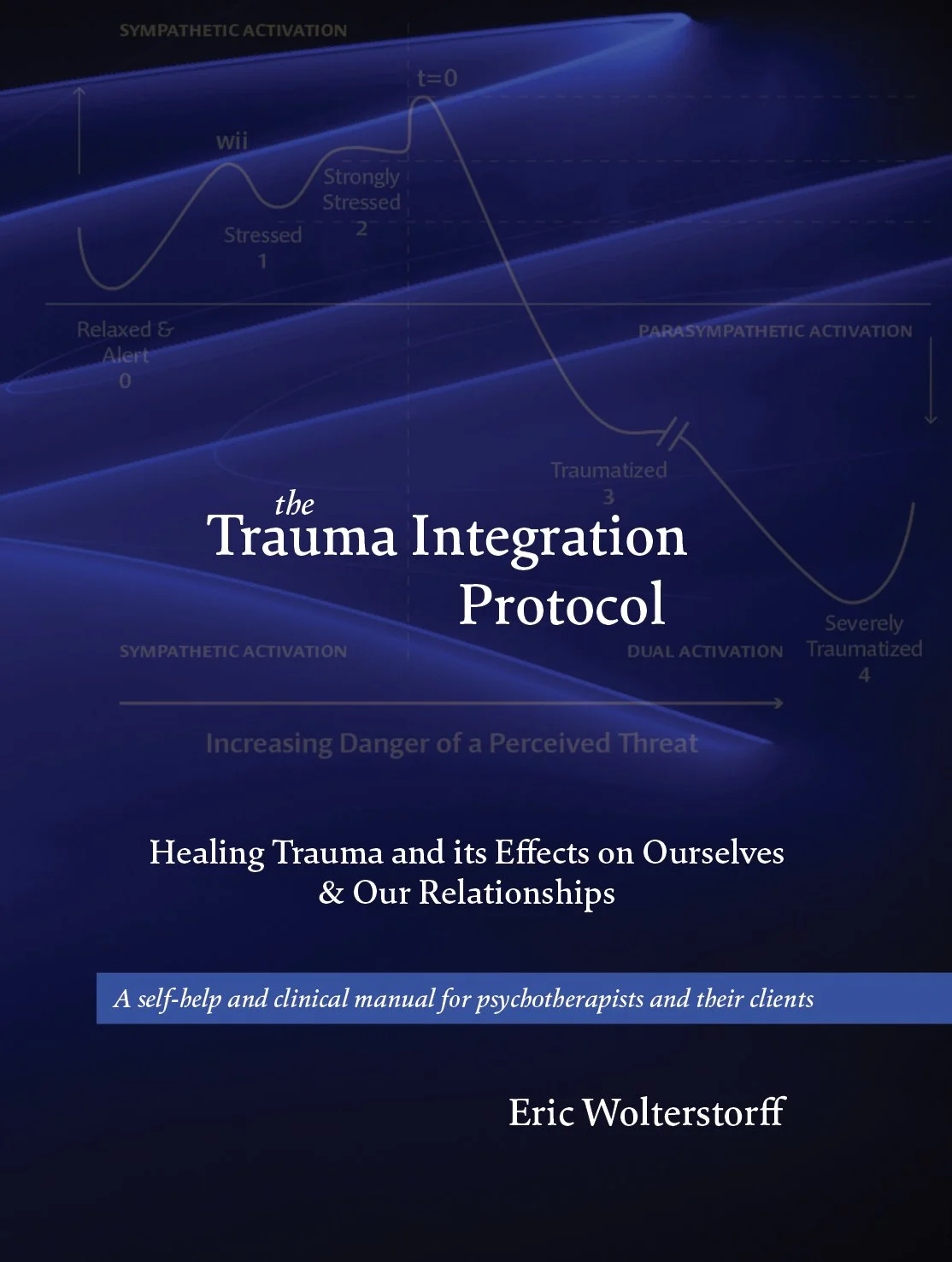
The Autonomic Nervous System Map
The Trauma Integration Protocol™ centers around a map of the Autonomic Nervous System proposed by Peter Levine, Ph.D. and further developed by Eric Wolterstorff, Ph.D.
It serves as a template on which to populate a client’s traumatic history, helping the practitioner, and the client, to better understand the innate responses to trauma and all subsequent symptoms that arise.
State 0: Calm, responsive, awake
State 1: Slightly anxious, annoyed, nervous, physical tension
State 2: Highly anxious, angry, panic symptoms, intense physical tension, fight or flight
State 3: Dual activated - tension with somatic collapse, anxiety, sleepy, panic, hopelessness
State 4: Pure dissociation marked by a distinct lack of physical sensation and flat affect

The HistoryThe ethos of the Trauma Integration Protocol (TIP) lies in the hands of Dr. Eric Wolterstorff, inspired from his learnings from Dr. Peter Levine, the renowned developer of Somatic Experiencing. Levine introduced a theoretical model of the behavior of the autonomic nervous system, outlining three actions that needed to take place to relieve posttraumatic symptoms: complete interrupted defense responses, integrate the traumatic event into the client’s chronology, and reintegrate the traumatic memory. These actions would contribute to and be aided by a shift of the autonomic nervous system state associated with the traumatic event.
In Wolterstorff’s TIP protocol, the practitioner utilizes containment – a method that associates the client to their traumatic experience by guiding them in inhibiting voluntary movements to allow for involuntary responses to emerge.
The Influence of Meditation.
While studying with Peter Levine, Wolterstorff was practicing yoga and meditation. Inspired by Levine’s description of defensive responses, Wolterstorff began a series of meditations where he imagined a single defensive response, then applied the self-observation techniques of his meditation practice to track his body sensations and impulses, resulting in significant improvement in the quality of his personal relationships.
Wolterstorff began assigning meditations to his clients designed to strengthen defensive responses that had been chronically weakened during periods of sustained trauma. He thought there might be two different ways of working with the defensive responses — to first help them to complete and then to strengthen them through focused repetition. As a result, clients recovered more quickly than with only the somatic experiencing approach.
The Neuroscience of Memory.
Wolterstorff also studied the ways in which people gain, store, and express memories in order to better explain why different interventions were necessary for recovery from trauma:
Conversations with clients → semantic memory.
The defensive and joining response meditation exercises → procedural memory.
The accessing and processing of sustained stress and trauma states → event/episodic/emotional memory.
Memory is the primary way that threats, stresses and traumas alter the functioning of our minds, impact our behavior in relationships, and shape our capacity to live and work closely with others.
By learning about memory — what triggers us to remember, ways we store aspects of our experience, and how memories change over time — we can develop interventions to access, evaluate, update, and become free of the negative effects of out-of-date memories as they pertain to trauma.
TIP Information Handout
For a concise overview of the Trauma Integration Protocol’s model, you can download our official TIP Information Handout.
OUR Values

Candor
We must remain open. Open to the vulnerability required in healing, and open to the limitations in our understanding of healing and the human mind and spirit.


Precision
We thoroughly investigate the mountains ahead before attempting the climb, ensuring our approach is accurate and intentional at every turn.


Patience
In a world that craves instant gratification, we stand strong knowing that the most impactful, meaningful, and worthwhile results are often the ones that come with time and persistence.


Safety
Trends will come and go, but we confidently sacrifice what’s ‘new and exciting’ for what’s ‘tried and true.’
Psychedelics in Therapy:
Our Position.We believe that psychedelics, when used judiciously and strategically, can serve as an accelerator of therapy. We don’t subscribe to the popular, but misguided notion, of “trust the medicine.” Gaps in our psyches need other people and structured interventions to build and heal.
These substances are powerful tools, not solutions, and can support processing when used appropriately with effective psychotherapy. When used improperly, substantial risks such as re-traumatization, inviting increased trauma structures, and potential false memories could lead to further dissociation, disorganization, and dysregulation.
While acknowledging the exciting promise of psychedelics in therapy, we advocate for a cautious and informed approach that integrates these substances as tools within a structured therapeutic framework. By remaining vigilant to their potential risks and not solely focusing on their benefits, we believe we can harness their potential in the safest and most effective manner, ultimately advancing the field of mental health treatment.
The team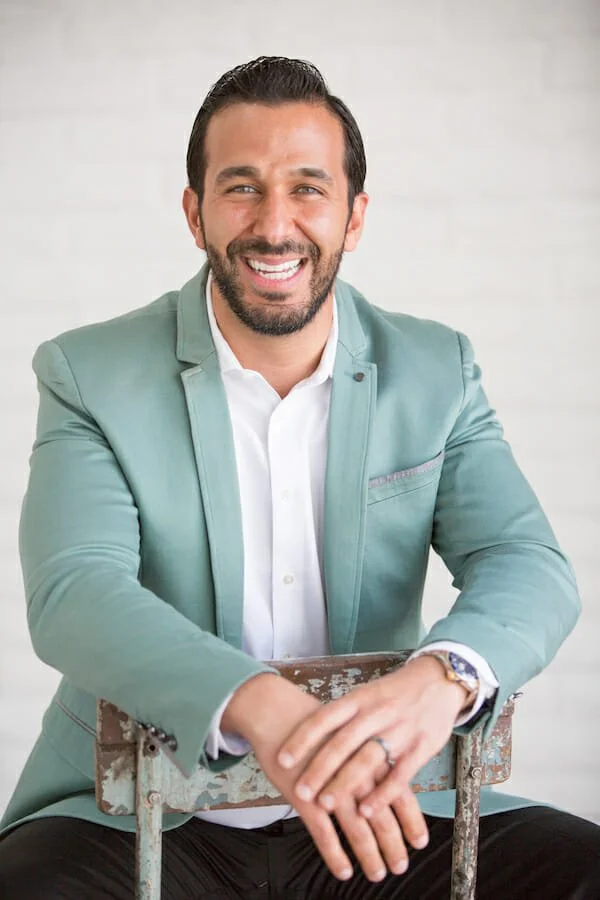
Perzan Irani - Executive Director
Perzan has been working with individuals for over a decade, helping them resolve symptoms that are adversely affecting their health and well-being using the Trauma Integration Protocol (TIP), the somatic memory-based modality developed by Eric Wolterstorff, PhD. He has received direct training, instruction, consultation, and collaborated with Dr. Wolterstorff and Christina Oshier Andrews, MA, LPC, in this innovative modality.
Perzan leads the TIP Foundations training and has conducted in-person and online training, both nationally and internationally, for over 90 psychologists, psychiatrists, therapists, and other professionals in this somatic system of healing.
Eric Wolterstorff, PhD - Developer, Advisory Board

Dr. Eric Wolterstorff began studying with Peter Levine, a leader in the field of traumatology, in 1993, and extended Levine's work into memory systems, transference, and response-to-threat group dynamics. Wolterstorff also trained in Hakomi bodywork with Pat Ogden and Worldwork with Max Schupbach and Arnie Mindell, and studied for a doctorate in group traumatology from 1998-2003 (his dissertation: A Speculative Model of How Groups Respond to Threats). He created the Foundations and Transference Trauma Integration Protocol (TIP) trainings and wrote the TIP Manual. Eric's expertise is cultural psychosocial development and group trauma, in particular the collaborative capacity of societies responding to existential, long-term threats. He founded and leads Sovereignty First.
Herbert Grassmann, PHD - Advisory Board

Dr. Herbert Grassmann is an internationally recognized author, speaker, and trainer in somatic education and trauma therapy. A Certified TIP Transference Practitioner, he integrates mindfulness, somatic psychology, and Polyvagal Theory to support trauma resolution and nervous system regulation. He introduced the "polyvagal triangle," a practical tool for recognizing and shifting autonomic states. Drawing from decades of experience in structural integration, Hakomi therapy, and body-based clinical work, he brings a deeply embodied approach to healing. Dr. Grassmann is co-editor of Somatic-Oriented Therapies, praised by Bessel van der Kolk, Peter Levine, and Daniel Siegel. Based in Nuremberg, Germany, he teaches and consults internationally.
Shirin Behzadi - Advisory Board

Shirin Behzadi is a recognized leading entrepreneur in North America who has garnered coverage in print and broadcast outlets for her achievements, most notably featured on Forbes.com. She is a Board Director, a former CEO of multiple companies, a CPA, and an investor with deep brand and start-up company expertise. She is an experienced executive in consumer and franchising industries.
Shirin has served on boards both as operating CEO, CFO, and as an independent director. She uses her years of experience as an operator and financial expert to bring an effective, strategic and collaborative point of view to her boards.
Shirin Behzadi is an immigrant from Iran and started her working career as an attendant at a gas station when she was 17 years old. She lives in Orange County, California with her husband and is very close to her two children, Sam and Sara, who live in Los Angeles.

“As a psychiatrist and researcher, I enrolled in the training in search of new and more effective methods to treat severe trauma. This method is intriguing, easy to understand, and very congruent with my comprehension of the physiopathology of trauma-related disorders. The training is very well organized and requires a low amount of individual study. I highly recommend this program to anybody working with trauma or stress-related disorders.”
-Giuseppe Guerriero, M.D., M.Sc.